Table of Contents
- Why Map Pack Ranking Matters More Than You Think
- The 3 Core Signals Google Uses for Map Pack Ranking
- What Most Business Owners Get Wrong About Map Pack Ranking
- Local Search Ranking Factors That Support Your Map Pack Position
- How to Start Improving Your Map Pack Ranking Today
- The Bottom Line on Map Pack Ranking
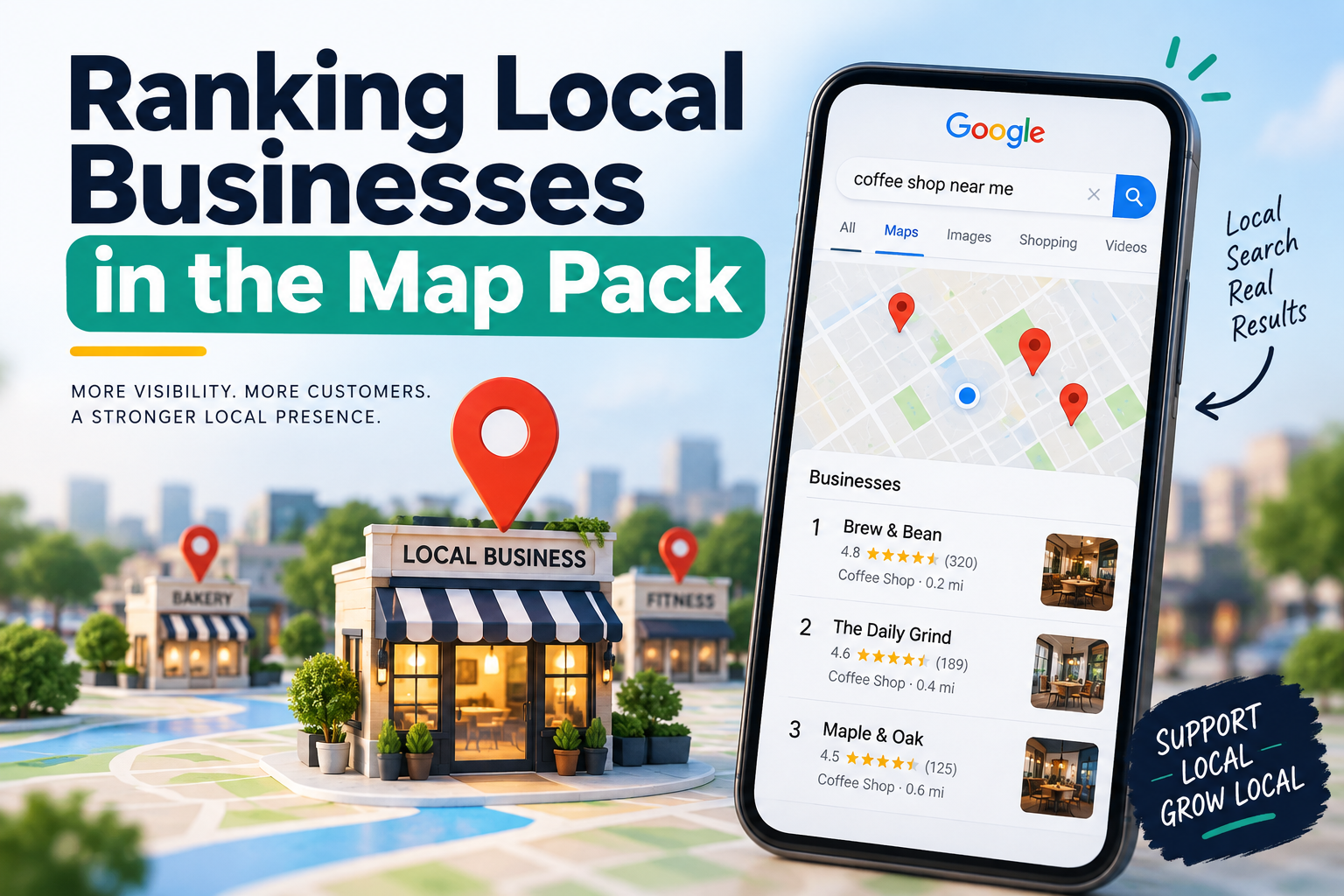
If you’ve ever searched for a plumber or an HVAC company and noticed that little box of three businesses at the top of Google’s results, you’ve seen the map pack. Map pack ranking determines which businesses get those coveted spots, and for most local service companies, landing there is the difference between a busy phone and a quiet one. But what does Google actually look at when deciding who shows up? This article breaks it down without the jargon.
Why Map Pack Ranking Matters More Than You Think
Most people searching for a local service click one of the top three map pack results. They don’t scroll far. They don’t dig through page two. If your business isn’t in that box, you are essentially invisible to a huge portion of potential customers who are ready to hire someone right now.
That’s not hype. It reflects how people actually behave when they need a roof fixed, a pipe unclogged, or an AC unit replaced. The map pack catches searchers at the exact moment they have their wallet out. That’s why map pack ranking should be a central part of any local marketing strategy, not an afterthought.
The 3 Core Signals Google Uses for Map Pack Ranking
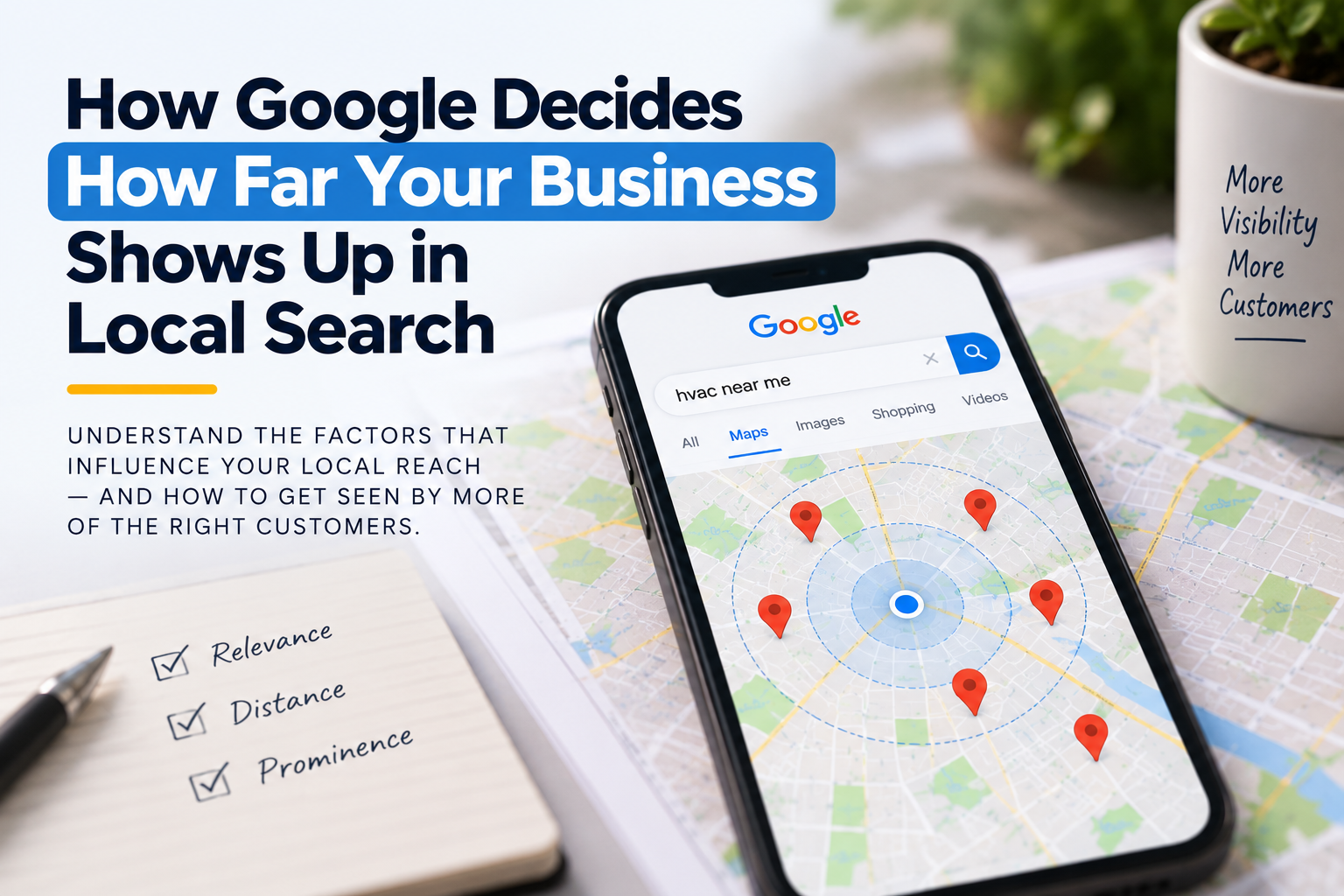
Google has published guidance on this topic over the years, and the framework comes down to three main signals: relevance, distance, and prominence. Understanding each one helps you see why certain businesses rank and others don’t.
1. Relevance: Does Your Profile Match What the Searcher Needs?
Relevance is about how well your Google Business Profile matches the search query. If someone types “emergency plumber,” Google wants to show a plumber, not a general contractor who occasionally does pipe work. Your primary business category on your Google Business Profile is the biggest lever here. If you haven’t set it precisely, or if you chose a broad category when a specific one exists, you are leaving relevance points on the table.
Beyond category, your profile description, your services list, and the content on your website all feed into this signal. A business profile that clearly describes what you do, who you serve, and where you operate will almost always outperform a thin, incomplete one. This is why Google Business Profile optimization is one of the first things worth doing before anything else.
2. Distance: How Close Is Your Business to the Searcher?
Distance is the signal that feels most obvious and is also the one you have the least control over. Google factors in how far a business is from the person searching, or from the location mentioned in the search. If someone in your city searches “roofer near me,” businesses physically closer to that person tend to rank higher, all else being equal.
You can’t move your address to game this. What you can do is make sure your address is accurate, consistent, and verified on your Google Business Profile. If you serve multiple towns or ZIP codes, building location-specific content on your website gives Google more signals that you are relevant to those broader areas, even if your physical address is in one spot.
This distance factor is also why map pack ranking can look different depending on where exactly a searcher is standing. If you’ve ever noticed your business shows up for some searches but not others, that distance dynamic is often part of the explanation. It is a surprisingly common source of confusion for business owners. The behavior is explained in more detail in this post about why your business shows up in maps for some searches but not others.
3. Prominence: Does Google See You as Established and Trusted?
Prominence is where the most work happens, and where most small businesses have real room to improve. Google defines prominence as how well-known a business is, both online and offline. In practical terms, this breaks down into a few specific things:
- Reviews and ratings: The number of Google reviews you have, how recent they are, and your average star rating all matter. A business with 80 reviews and a 4.7 average is going to signal more prominence than one with 6 reviews and a 3.9.
- Citations and directory listings: A citation is any mention of your business name, address, and phone number on another website, like Yelp, Angi, the Better Business Bureau, or a local chamber of commerce directory. Consistent, accurate citations across the web tell Google your business is real and established.
- Links to your website: When other websites link to yours, it signals authority. Local news sites, local blogs, industry associations, and even sponsorships that generate links all contribute to prominence.
- Your website itself: A well-built site that loads fast, works on mobile, and contains clear, locally relevant content reinforces every other signal you are sending. A slow or broken site undermines the rest of your effort. If your site is not doing its job, investing in web design that converts local traffic into actual leads is often the most impactful fix.
What Most Business Owners Get Wrong About Map Pack Ranking
The most common mistake is treating the Google Business Profile as a one-time setup task. Business owners fill it out once, maybe upload a couple of photos, and then forget about it for two years. Meanwhile, competitors are posting updates, responding to every review, adding new photos monthly, and filling in every available field including hours, services, products, and Q&A.
Google’s algorithm notices activity. A profile that shows signs of active management tends to perform better than one that looks abandoned. This doesn’t require hours each week. Fifteen minutes a month spent posting an update, responding to a new review, or adding a fresh photo is enough to stay ahead of competitors who are doing nothing.
The second mistake is ignoring review velocity. Getting 50 reviews in one month and then no new reviews for a year looks suspicious and also loses the freshness signal. A slow, steady stream of new reviews over time is far more valuable than a one-time push.
Local Search Ranking Factors That Support Your Map Pack Position
Your Google Business Profile does not operate in isolation. Local search ranking factors that live on your actual website also feed into how Google evaluates your business for the map pack. A few that matter most for small service businesses:
- Location pages with real content: If you serve five towns, a page for each town with genuine information about your service in that area will outperform a generic “service areas” list every time.
- Consistent NAP data: NAP stands for name, address, and phone number. These three pieces of information need to match exactly across your website, your Google Business Profile, and every directory listing. Even small inconsistencies, like “St.” versus “Street” in your address, can dilute your local signals.
- Mobile performance: Most local searches happen on a phone. If your site loads slowly or is hard to navigate on mobile, visitors leave fast, and Google takes note of that behavior.
For businesses in specific trades, local SEO for small businesses means getting each of these details right at a local level, not just putting up a website and hoping. Local SEO services focused on your specific trade and region can handle the groundwork if you’d rather spend your time running jobs instead of managing citations.
How to Start Improving Your Map Pack Ranking Today
You don’t need a massive budget to start moving the needle. Here is a practical starting list that any business owner can act on:
- Log into your Google Business Profile and confirm every field is complete, especially your primary category, service list, hours, and description.
- Check that your name, address, and phone number match exactly on your website and on Google.
- Search your business on Yelp, Angi, and the BBB. If the listings exist but have wrong information, claim and correct them.
- Ask your last five satisfied customers to leave a Google review. Make it easy by sending them a direct link.
- Add at least three new photos to your profile this week, including real job site photos, not stock images.
None of this requires technical expertise. It just requires attention. The businesses winning the map pack in most small and mid-sized markets are not doing anything exotic. They are simply doing the basics consistently while their competitors do nothing.
The Bottom Line on Map Pack Ranking
Google’s local algorithm is built around a simple question: which business is the most relevant, closest, and best-established option for this searcher? Your job is to give Google clear, consistent evidence that the answer is you. That means a complete and active Google Business Profile, a strong base of recent reviews, accurate citations across the web, and a website that earns trust rather than loses it on the first click.
Map pack ranking is not a lottery. It rewards businesses that take their online presence seriously. Start with the basics, stay consistent, and the results will follow.
Frequently Asked Questions
How long does it take to see improvements in map pack ranking?
Most businesses start seeing movement within 60 to 90 days of making consistent improvements to their Google Business Profile, building citations, and generating fresh reviews. Competitive markets may take longer, but the baseline work always moves things in the right direction over time.
Does my website affect my Google Maps ranking?
Yes. Your website is a significant input into your map pack ranking through the prominence signal. A site with locally relevant content, fast load times, and accurate business information reinforces every other local SEO signal you are building. A weak or outdated website can hold back even a well-optimized Google Business Profile.
How many Google reviews do I need to rank in the map pack?
There is no magic number, and it depends heavily on your market and competition. In less competitive areas, 15 to 30 good reviews may be enough to stand out. In larger markets you may need 80 or more. More importantly, new reviews coming in regularly signal freshness and continued trust, which matters just as much as the total count.
Does paying for Google Ads help my map pack ranking?
No. Paid Google Ads have no effect on your organic map pack position. The map pack is driven entirely by the relevance, distance, and prominence signals described above. Running ads and ranking organically in the map pack are separate tracks that don’t influence each other.
Can I rank in the map pack if my business doesn't have a physical storefront?
Yes, if you are a service-area business, meaning you travel to customers rather than having them come to you. You can still create a Google Business Profile and hide your address while listing your service areas. Service-area businesses absolutely appear in the map pack, though the distance signal works differently for them than it does for storefront businesses.