You’re Not Imagining It — Local Rankings Really Do Change
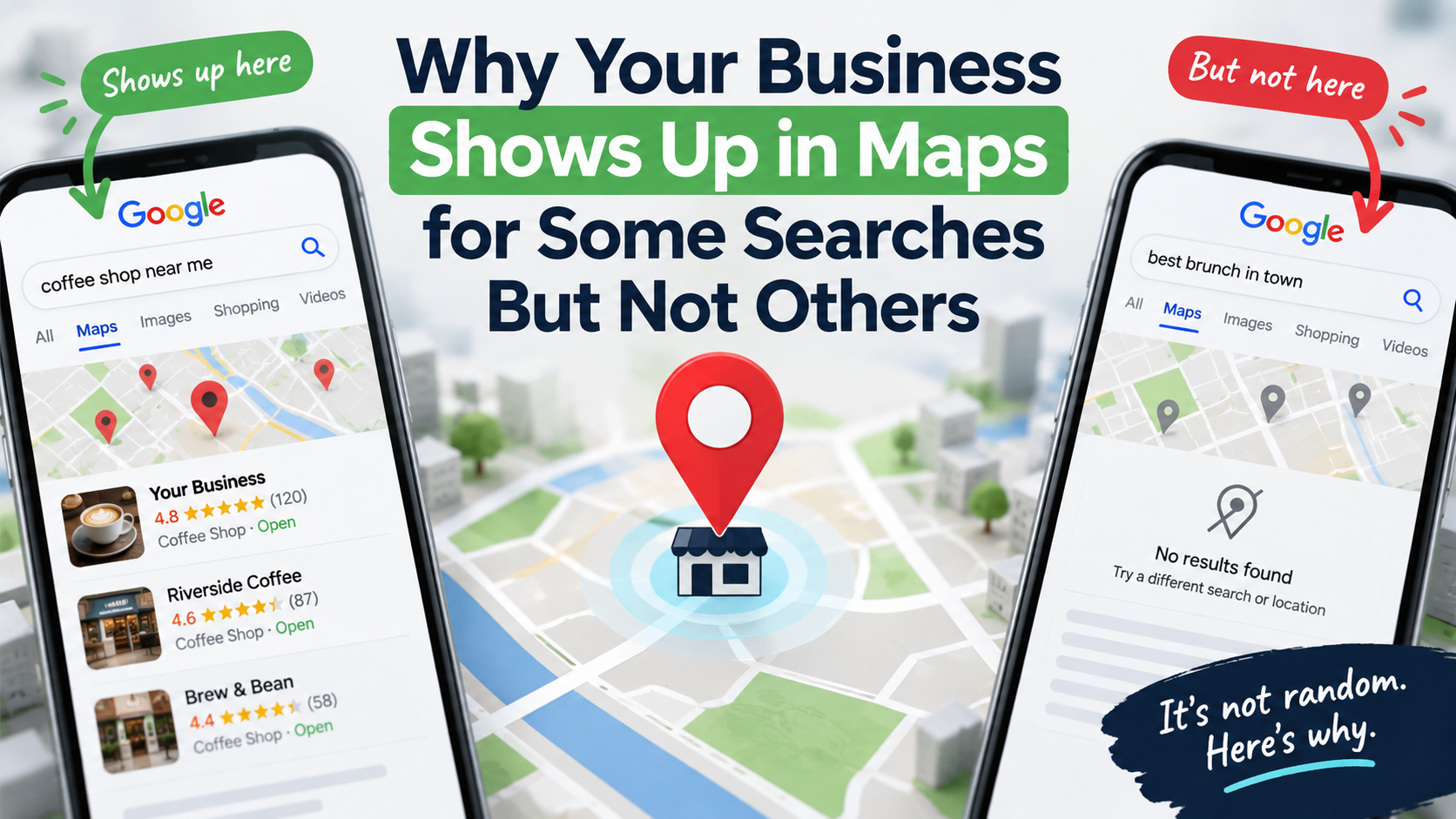
A lot of business owners notice this and assume something is broken. They search their own company name or service, see themselves in the map results, and feel good. Then a customer calls and says they couldn’t find you anywhere on Google. Both of you are right.
Google doesn’t show the same results to everyone. It adjusts what it shows based on several factors — and understanding those factors is the first step toward actually fixing the problem.
The Four Biggest Reasons Your Map Ranking Changes
1. Location at the Time of the Search
This is the biggest one. Google’s map pack results — those top three businesses shown on a map — are heavily influenced by where the person searching is standing (or driving, or sitting) when they search.
If you run an HVAC company based in the center of town, you might rank well for someone searching from two blocks away. But if that same person searches from a neighborhood five miles out, a competitor closer to them might show up instead — even if your business is objectively better.
This is why you might rank great when you search from your shop, but your potential customer on the other side of town gets different results entirely.
2. The Exact Words Used in the Search
“Plumber near me” and “emergency plumber” and “water heater repair” are three different searches — and Google may rank completely different businesses for each one.
Your Google Business Profile and your website need to clearly signal which services you provide. If you only mention “plumbing” in general terms, you may not rank when someone types something more specific. The more precisely Google understands what you do, the more searches you can show up for.
3. Whether You’re Searching While Logged Into Google
Google personalizes results based on your search history, your location history, and your past behavior. If you’ve visited your own website before, Google knows that. It may show you your own business more prominently than it shows a stranger — because it thinks it’s what you want.
This makes it nearly impossible to judge your own local ranking just by searching for yourself. You’ll almost always see a more favorable version of the results than a brand-new customer would.
4. Your Google Business Profile Completeness and Activity
Google uses your Business Profile to decide whether you’re a trustworthy, active local business. Profiles that are filled out completely — with accurate hours, real photos, responses to reviews, and posts — tend to rank better than profiles that are half-empty or haven’t been touched in two years.
If you set up your profile once and forgot about it, that’s working against you every day.
What Google Is Actually Trying to Do
It helps to understand Google’s goal. They’re not trying to rank the business that’s been around longest, or the one with the fanciest website. They’re trying to show the most relevant, trustworthy, and nearby result for that person, in that moment, for that specific search.
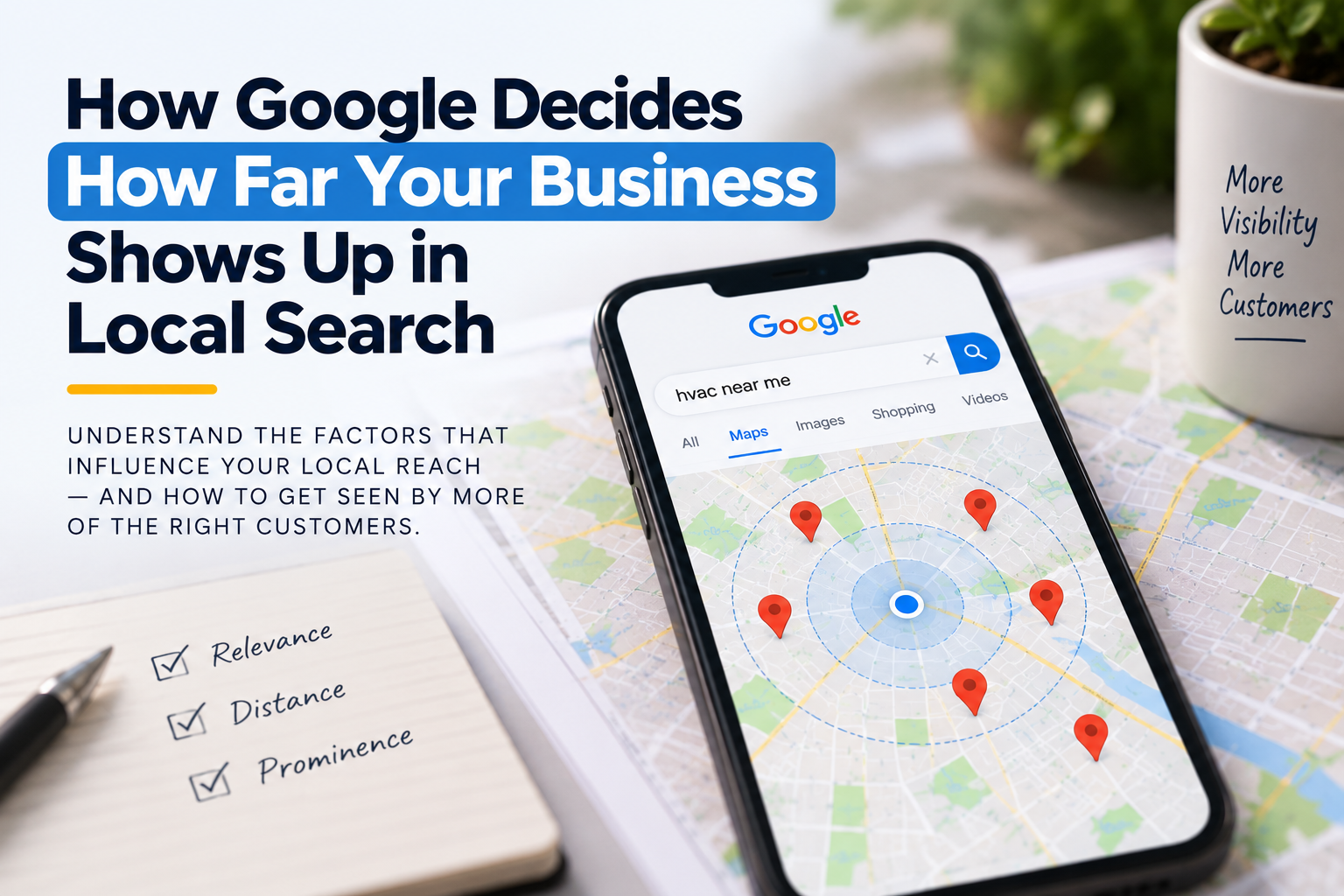
Google uses three main signals to decide who wins the map pack:
- Relevance: Does your business actually do what the person is searching for?
- Distance: How close are you to the person searching?
- Prominence: Does Google see you as a credible, well-known local business?
Proximity you can’t control. But relevance and prominence are both things you can actively improve.
How to Check Your Real Local Ranking (Without Fooling Yourself)
Because your personal search history skews results, don’t use your own Google account to check your rankings. A few more reliable options:
- Open an incognito or private browser window and search from different locations
- Use a free tool like Google’s “Local Search” preview in Google Search Console
- Ask a friend or customer in a different part of your service area to search and tell you what they see
- Use a rank-tracking tool that checks results from specific geographic coordinates
None of these are perfect, but they’ll give you a much more honest picture than searching from your office.
What Actually Moves the Needle
If you’re consistently not showing up in the map pack for the searches that matter to you, there are real things that can help:
- Complete your Google Business Profile fully — every section, every service, real photos
- Get reviews consistently (not in a big burst — a steady trickle is better)
- Respond to every review, positive or negative
- Make sure your business name, address, and phone number are identical everywhere online
- Add specific service pages to your website so Google understands what you offer
- Post updates to your Business Profile at least a couple of times per month
These aren’t tricks. They’re the signals Google uses to decide you’re a legitimate, active business worth recommending.
This Problem Isn’t Just for Home Service Companies
HVAC companies and plumbers deal with this constantly — but so do medical and dental offices, restaurants, law firms, and any other local business. A dental practice trying to show up for “dentist accepting new patients” is dealing with the exact same ranking inconsistency problem. The strategies for fixing it are nearly identical, though the specifics matter. If you’re in that space, the same principles behind new patient marketing for medical and dental practices apply here — show up where your patients are actually searching, not just where you hope they’re looking.
The Short Version
Your Google Maps ranking isn’t one fixed position. It changes based on who’s searching, where they are, what words they used, and how strong your overall local presence is. The good news is that most of what drives those results is within your control — it just takes consistent effort, not magic.
If you want to know exactly where you stand right now, a free local SEO audit will show you the gaps in plain terms, without a sales pitch attached. And if you want to dig into what a real local SEO strategy looks like, our local SEO services page walks through how we actually approach this for small businesses.
Frequently Asked Questions
Why do I show up in Google Maps on my phone but not on my computer?
Your phone uses your GPS location, while your computer may use a different estimated location based on your IP address or Wi-Fi. Google’s map results are heavily location-based, so even a small difference in where Google thinks you’re searching from can change what shows up.
Does having more Google reviews help you rank higher in Maps?
Yes, reviews are a real ranking factor — but it’s not just about quantity. Recency, consistency, and how you respond to reviews all matter. A business that gets two or three reviews per month steadily tends to outperform one that got 50 reviews two years ago and has been quiet since.
Why does a competitor with fewer reviews rank above me?
Reviews are only one piece of the puzzle. Google also weighs how complete and active your Business Profile is, how well your website signals your services, how many credible local websites link to yours, and how close the competitor is to the person searching. It’s a combination of factors, not a single score.
How far does Google's map pack radius actually extend?
There’s no fixed radius — it depends on the type of business, how competitive the area is, and how many good options are nearby. In a rural area, Google might pull results from 20 miles away. In a dense city, the top three results might all be within a few blocks of the searcher. You can’t control the radius, but you can make your business the strongest option within it.
Do I need to pay for Google Ads to show up in the map pack?
No. The map pack (the three businesses shown under the map) is not paid advertising — it’s organic. Google determines those spots based on relevance, distance, and prominence. There are paid Local Service Ads that appear above the map pack, but the organic map results are earned, not bought.