Key Takeaways
- Your Google Business Profile is the single highest-impact place to invest time in electrical contractor marketing, especially getting the category, service area, and reviews right.
- A website that loads slowly on mobile or buries your phone number is actively costing you calls, regardless of how good your actual electrical work is.
- Each major service you offer, such as panel upgrades, EV charger installation, and generator hookups, should have its own dedicated page to rank for those specific searches.
- Emergency electrical searches behave differently from planned searches, so your marketing needs to address both with separate content and clear after-hours availability signals.
- SEO results take time to build, so the right moment to start improving your online presence is during slow periods, not after demand has already dropped.
Table of Contents
- Why Electricians Struggle to Market Themselves Online (electrical contractor marketing)
- 1. Get Your Google Business Profile Right First
- 2. Your Website Needs to Convert, Not Just Exist
- 3. Build Pages Around the Specific Jobs You Want
- 4. Show Your Credentials Everywhere
- 5. Think About Emergency Search Separately
- 6. NAP Consistency Matters More Than Most Electricians Realize
- 7. Don't Ignore the Slow Seasons Before They Hit
- The Honest Answer on Where to Start
Electrical contractor marketing comes down to one thing: being findable at the exact moment someone needs an electrician. That means showing up in local search results, earning trust fast, and making it easy for a nervous homeowner to call you over the next guy. If you’re not doing those three things consistently, you’re leaving real jobs on the table every week.
Electricians have a unique challenge. Demand isn’t always predictable. You get slammed during home renovation season, after storms knock out panels, or when a new buyer is getting an inspection done. Then things slow down. The goal of good electrical contractor marketing is to smooth that curve so you’re not scrambling for work one month and turning people away the next.
Why Electricians Struggle to Market Themselves Online (electrical contractor marketing)
Most electricians didn’t get into the trade to write website copy or manage a Google profile. They got in because they’re good with their hands and they understand systems. That’s completely fair. But the internet doesn’t care how good your work is if customers can’t find you.
The core problem with electrical contractor marketing for most small shops is inconsistency. A half-built website. A Google Business Profile that was set up once and never touched again. No reviews, or reviews that stopped three years ago. These gaps don’t just look unprofessional. They actively hurt your local search rankings.
Here’s what’s working right now for local electricians who are actually showing up in search results and getting calls.
1. Get Your Google Business Profile Right First
Your Google Business Profile is the first thing most homeowners see when they search “electrician near me” or “panel upgrade [your town].” If it’s incomplete, you’re invisible in the map results.
For electrical contractor marketing, your profile needs:
- The correct primary category (“Electrician,” not a generic trade category)
- Your real service area set to the towns you actually work in
- A complete list of services: panel upgrades, EV charger installation, generator hookups, code inspections, outlet repairs
- At least 15 to 20 reviews, with new ones coming in regularly
- Photos of actual job sites, your truck, your team
- A business description that mentions your city or region by name
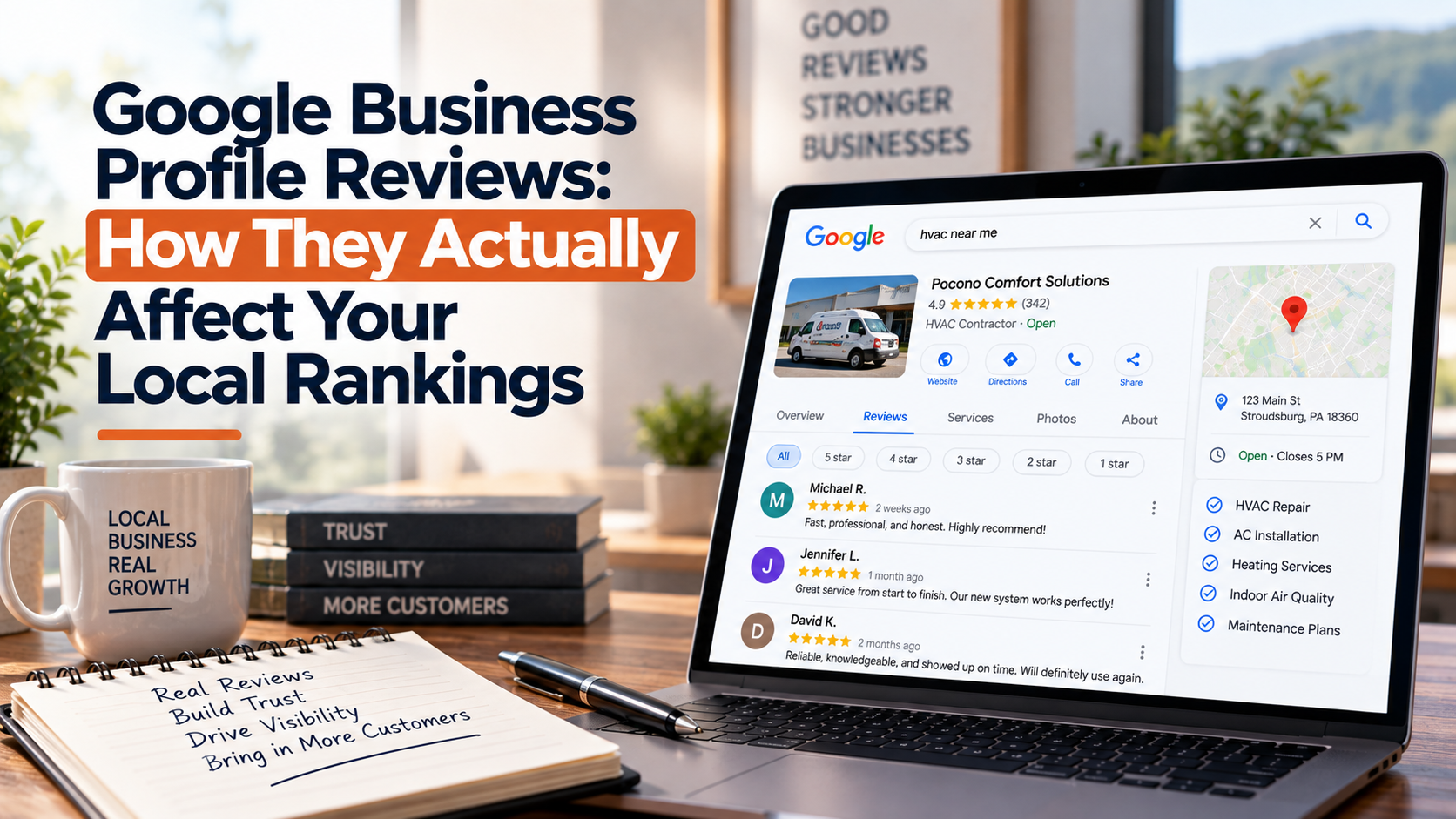
Reviews deserve special attention. Google Business Profile reviews directly affect your local rankings, not just your reputation. Getting a review after every completed job should be a standard part of your close-out process, not an afterthought.
2. Your Website Needs to Convert, Not Just Exist
A lot of electricians have a website that sits there doing nothing. It loads slow, it’s hard to read on a phone, and it doesn’t tell visitors what to do next. In electrical contractor marketing, that’s a direct revenue leak.
Homeowners looking for an electrician are often stressed. Maybe a breaker keeps tripping. Maybe they just bought a house and the inspector flagged the panel. They want to know quickly: Do you serve my area? Are you licensed? Can I trust you? How do I reach you?
Your website should answer all four of those questions above the fold, before anyone has to scroll. That means a clear headline, your service area, your license number, and a phone number that’s easy to tap on mobile. Web design that converts for local businesses is built around that decision moment, not around looking impressive in a portfolio.
If your site takes more than three seconds to load on a phone, you’re losing a measurable percentage of visitors before they ever read a word.
3. Build Pages Around the Specific Jobs You Want
One of the most overlooked parts of local SEO for electricians is service-specific landing pages. A single “Services” page listing everything you do is not enough.
If you want to rank for EV charger installation in your town, you need a page specifically about EV charger installation that mentions your town. If you want panel upgrade calls, same idea. Google matches search intent to specific page content. A generic services page doesn’t compete with a focused, well-written page that speaks directly to what someone typed.
This is where electrical contractor marketing gets concrete. You’re not just “doing SEO.” You’re writing a page that answers: What does a panel upgrade cost? How long does it take? Do I need a permit? Who do you serve? That’s the content that earns the click and the call.
4. Show Your Credentials Everywhere
Electricians are licensed, bonded, and insured for a reason. Homeowners know this, and they look for proof. Your state license number, your insurance coverage, and any trade affiliations you hold should be visible on your website and your Google profile.
Belonging to a recognized trade organization gives customers a shorthand for trust. The Plumbing-Heating-Cooling Contractors Association and similar organizations exist partly to help contractors establish credibility with the public. If you’re a member of any regional or national trade group, display it. If you’re not, it’s worth considering.
For electrical work specifically, where homeowners are genuinely worried about safety, trust signals convert. A license number displayed next to your phone number isn’t just a legal formality. It’s part of your electrical contractor marketing whether you think of it that way or not.
5. Think About Emergency Search Separately
Electricians get emergency calls. Someone’s power is out after a storm. A circuit is sparking. The panel is making a sound it shouldn’t. These searches happen fast and the person searching is not shopping around. They need someone now.
Emergency search behavior is different from planned search behavior. Someone typing “EV charger installation Stroudsburg” has time to compare. Someone typing “emergency electrician near me” is going to call whoever shows up first and looks trustworthy.
Your electrical contractor marketing should account for both. That means a specific page or section for emergency electrical services, and making sure your Google Business Profile has your after-hours availability clearly set. If you take emergency calls, say so explicitly. Don’t make someone guess.
6. NAP Consistency Matters More Than Most Electricians Realize
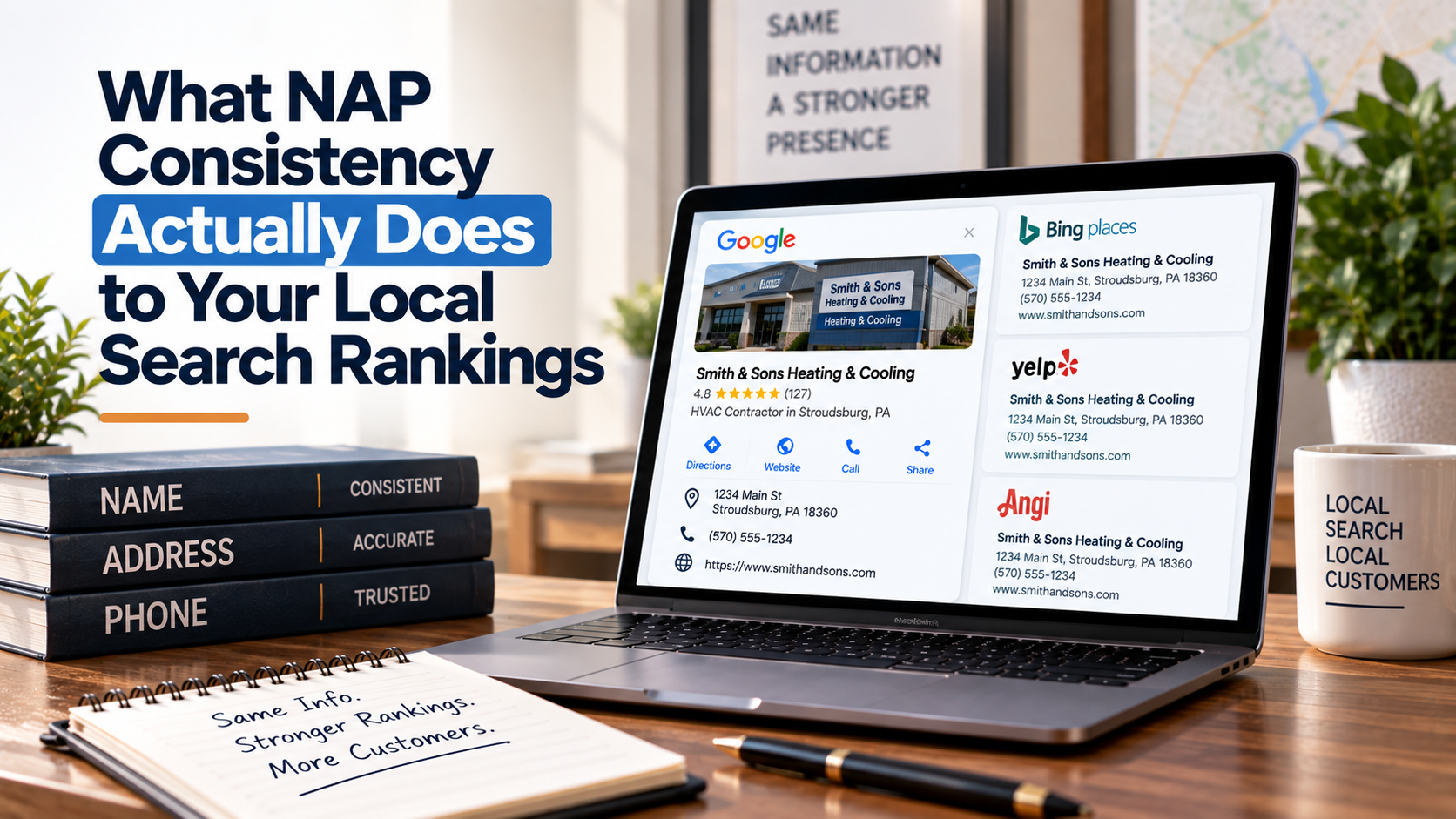
NAP stands for Name, Address, and Phone number. How those three things appear across the web matters directly to how Google ranks your business in local results. If your business name is listed slightly differently across different directories, or your old address is still showing up somewhere, that inconsistency creates confusion that hurts your visibility.
This is a quiet, unsexy part of electrical contractor marketing, but it’s foundational. NAP consistency has a real, documented effect on local search rankings, and it’s fixable without a big budget. Audit your listings on Google, Yelp, Angi, HomeAdvisor, and any local directories. Make sure everything matches exactly.
7. Don’t Ignore the Slow Seasons Before They Hit
Electrical work doesn’t have the same sharp seasonal swings as HVAC, but it’s not perfectly flat either. Renovation projects cluster in spring and fall. Post-storm generator and panel work spikes after major weather events. New construction follows local housing starts.
Good electrical contractor marketing means building your online presence during the slow periods so you’re ranking when demand picks back up. SEO takes time. If you wait until you need the calls to start working on your Google profile and your website, you’ll be three months late every single time.
The electricians who stay consistently booked are the ones who treat their marketing like a recurring maintenance job, not a one-time fix.
The Honest Answer on Where to Start
If you had to pick two things to fix this week, make it your Google Business Profile and your website’s mobile speed and phone number visibility. Those two changes reach the most homeowners in the shortest time. Everything else, service pages, review strategy, NAP cleanup, builds on top of that foundation.
Electrical contractor marketing doesn’t require a big agency retainer or a complicated ad spend. It requires showing up correctly in the places your customers are already looking. Start there, do it consistently, and the calls follow.
Frequently Asked Questions
How do electricians get more local customers online?
The fastest path is a complete, accurate Google Business Profile with real reviews and correct service categories. Pair that with a mobile-friendly website that shows your license number and phone number clearly, and you’ll outperform most local competitors who’ve neglected those basics.
Does SEO actually work for electrical contractors?
Yes, especially local SEO. Homeowners searching for electricians are high-intent buyers. Ranking in the Google map pack for searches like ‘electrician near me’ or ‘panel upgrade [city]’ consistently produces phone calls without paying per click.
What should an electrician's website include?
Your service area, your state license number, a tap-to-call phone number visible at the top of the page, a list of specific services you offer, and real photos of your work. Each major service should ideally have its own dedicated page so Google can match it to specific search queries.
How often should an electrician ask for Google reviews?
After every completed job, without exception. Make it part of your standard close-out process, whether that’s a text with a direct review link, a follow-up email, or a simple verbal ask when you’re collecting payment. Consistent new reviews signal to Google that your business is active and trusted.
Is paid advertising worth it for electricians?
Paid ads can fill gaps quickly, especially for emergency services, but they stop the moment you stop paying. A solid foundation of local SEO, reviews, and a well-built website creates visibility that compounds over time and costs less per call in the long run. Most small electrical shops benefit from building the organic foundation first.